
While recent oilfield news highlights major service providers deploying autonomous directional drilling, machine-learning rate-of-penetration (ROP) algorithms, and robotic pipe handling across thousands of conventional wells, the implications for the broader energy transition are far more profound. As Chief Engineer at Avoltium, my focus is on how automation in deep drilling directly intersects with the execution of large-scale green hydrogen projects, specifically subsurface hydrogen storage in salt caverns or depleted fields, high-enthalpy geothermal wells, and their associated surface processing infrastructure. The transition from manual rig oversight to closed-loop digital control is not merely an exercise in reducing non-productive time (NPT); it is a core requirement for ensuring wellbore integrity in gas-tight subsurface energy reservoirs and optimizing shared water and electrical utilities on site.
Downhole Precision and Geomechanical Integrity in Energy Storage
Subsurface geological storage of hydrogen requires drilling vertical and directional wellbores with strict inclination controls and minimal formation damage. Automated drilling platforms utilize real-time downhole measurements while drilling (MWD) coupled with rotary steerable systems (RSS) to maintain tortuosity limits within ±0.1° per 30 meters. This precise trajectory control is critical when setting intermediate and production casing strings in salt formations or tight caprocks intended for high-pressure H2 storage operating between 60 bar and 200 bar.
From a geomechanical standpoint, high-frequency ROP optimization algorithms adjust weight-on-bit (WOB) and top-drive rotational speeds in response to real-time mechanical specific energy (MSE) calculations. By maintaining MSE near the theoretical minimum for a given rock unconfined compressive strength (UCS), these automated systems minimize micro-fracturing along the borehole wall. Micro-fractures that are tolerable in standard oil production become primary leak paths for molecular hydrogen, given its tiny kinetic diameter (0.289 nm) and elevated diffusivity. Automated control prevents drill-string stick-slip oscillations that cause borehole enlargement, ensuring concentric cement sheaths capable of enduring cyclic thermal and pressure loading during rapid hydrogen injection and withdrawal cycles.
Water Treatment and Fluid Circulation Dynamics
A critical connection between rig automation and green hydrogen balance-of-plant (BOP) design lies in water management. Automated drilling rigs rely on real-time fluid telemetry—continuously measuring density, plastic viscosity, and yield point—to modulate solids control equipment dynamically. In deep well construction, water-based muds (WBM) require substantial volumes of fresh or clarified water. When integrated into an industrial clean-energy site plan, rig fluid processing must be coordinated with the primary electrolyzer water treatment train.
Closed-Loop Mud Systems vs. Electrolyzer Feed Water
A standard 100 MW proton exchange membrane (PEM) or alkaline electrolyzer facility requires ultra-pure feed water with an electrical conductivity below 0.1 µS/cm. Stoichiometrically, producing 1 kg of H2 consumes 8.9 kg of pure H2O. However, accounting for reverse osmosis (RO) recovery limits (typically 65% to 75% system recovery depending on raw water total dissolved solids [TDS]) and continuous electrode deionization (EDI) blowdown, the raw water intake requirement ranges from 18 to 25 kg of water per kg of hydrogen produced.
“Automating downhole hydraulics and fluid recycling on the rig floor directly reduces raw water competition, enabling integrated water treatment facilities to prioritize high-purity feed for electrolyzer stacks.”
By deploying automated centrifuges and real-time particle-size analyzers, modern automated rig fluid systems recover up to 92% of drill fluids, dramatically lowering raw water makeup requirements during well construction. This allows process engineers to consolidate site industrial water treatment infrastructure, utilizing common raw water pre-filtration, ultrafiltration (UF), and brackish water reverse osmosis (BWRO) trains for both rig operations and hydrogen production feed systems.
Surface Integration: Power Dynamics and Electrolyzer Balance-of-Plant
The adoption of electric rig drives and automated power management systems aligns directly with the electrical architecture of green hydrogen facilities. Modern automated rigs utilize dynamic braking energy recovery and microgrid controllers to manage multi-megawatt transient loads during tripping operations, where drawworks demand spikes by 1.5 MW to 3.0 MW within seconds.
When an automated drilling program operates adjacent to an electrolyzer plant powered by dedicated renewable generation (such as a 200 MW solar-wind hybrid), power allocation must be actively balanced. PEM electrolyzers operating at current densities of 1.5 A/cm2 to 2.5 A/cm2 offer rapid response times (ramping from 10% to 100% capacity in seconds), making them ideal for dynamic load shedding when the automated rig experiences peak power draw during heavy tripping or high-torque reaming operations. Conversely, alkaline electrolyzer systems, operating at lower current densities (0.2 A/cm2 to 0.6 A/cm2) and higher thermal inertia, require buffered microgrids with battery energy storage systems (BESS) to prevent frequency degradation on the local bus during rig load swings.
Cost Breakdown and Implementation Roadmap for Engineers
Evaluating automated drilling and its auxiliary systems requires analyzing capital expenditure (CAPEX) against long-term operational efficiency (OPEX). Below are benchmark metrics established across recent subsurface energy storage and hydrogen infrastructure installations:
Key Performance Metrics and Economics
1. Electrolyzer Specific Energy Consumption: 50 to 55 kWh/kg H2 at the stack level; total plant efficiency (including water treatment, cooling, and compression to 30 bar) ranges from 58 to 64 kWh/kg H2.
2. Balance-of-Plant CAPEX: Water purification, thermal management, and electrical balance-of-plant account for 500 per kW of installed electrolyzer capacity.
3. Drilling NPT Reduction: Autonomous directional control and predictive maintenance algorithms reduce Non-Productive Time by 25% to 35%, cutting deep well delivery costs by approximately $450,000 per 3,000-meter section.
4. Water Treatment Optimization: Integrated closed-loop mud recycling reduces raw water pretreatment unit CAPEX by 12% through shared pre-filtration capacity.
For engineering teams designing the next generation of subsurface energy storage and hydrogen production hubs, automation cannot remain isolated within the rig floor. Integrating automated drilling telemetry, rig power management, and high-efficiency water treatment into the overall plant automation strategy is essential to minimizing the levelized cost of hydrogen (LCOH) and ensuring long-term operational reliability.
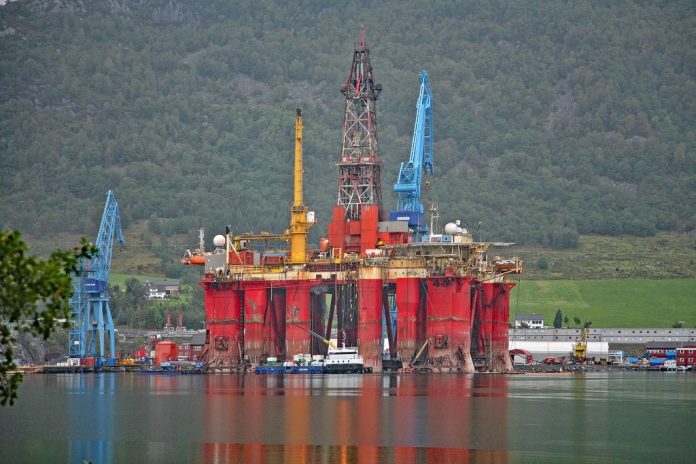
Image: 00 3783 Oil and gas platform in Norway by W. Bulach, licensed under CC BY-SA 4.0.