
Navigating the Green Energy Pivot: Offshore Wind Integration, NextGen Electrolyzer Architectures, and Strategic Capital Realignment in Global Energy Markets
Engineering Insight: The global clean energy ecosystem is undergoing a profound structural rebalancing, characterized by capital reallocation, technological consolidation,…
The global clean energy ecosystem is undergoing a profound structural rebalancing, characterized by capital reallocation, technological consolidation, and the rapid alignment of renewable power generation with green molecular production. A surge in crosssector transaction activity—spanning large-scale green hydrogen projects, utilityscale battery energy storage systems (BESS), offshore wind developments, and highprofile divestitures by supermajors like Shell—signals a decisive transition from speculative project pipelines to bankable, highefficiency energy infrastructure.
For chemical engineers, energy strategists, and infrastructure developers, this deal flow reveals more than simple market liquidity. It highlights the rigorous engineering integration required to couple variable offshore renewable power with industrialscale hydrogen generation. As legacy energy giants rationalize their portfolios to preserve capital discipline while chasing higher internal rates of return (IRR), the technical baseline for green hydrogen production is rapidly shifting toward standardized, highdensity electrolyzer stacks, optimized Balance of Plant (BOP) systems, and dynamic gridbalancing storage assets.
Key technical and strategic vectors dominating this market shift include:
- Capital Rationalization by Supermajors: Divestiture of lowermargin power retail or legacy assets to fund gigawattscale decarbonization hubs and highmargin clean molecular pathways.
- Offshore WindtoHydrogen Integration: Direct coupling of multimegawatt offshore wind turbines with water electrolysis, comparing highvoltage direct current (HVDC) power transmission against subsea gaseous hydrogen pipeline transport.
- Electrolyzer System Maturation: Performance tradeoffs among Proton Exchange Membrane (PEM), Alkaline Electrolysis (AWE), and Solid Oxide Electrolysis Cells (SOEC) under dynamic intermittency.
- Balance of Plant (BOP) Optimization: Advanced water treatment, thermal management, catalytic oxygen deoxidizers, and highefficiency power electronics to drive down the Levelized Cost of Hydrogen (LCOH).
Technical Breakdown
The direct integration of offshore wind generation with water electrolysis systems presents significant engineering challenges, primarily driven by supply intermittency, hostile marine operating environments, and strict gas purity requirements. When evaluating offshorewindtohydrogen topology, system architects must choose between centralized onshore electrolysis connected via HVDC lines or decentralized offshore electrolysis hosted directly on platform substations or integrated wind turbine foundations.
The subsea transport of compressed gaseous hydrogen via pipeline offers an energy density advantage over traditional HVDC transmission systems, exhibiting significantly lower energy loss over distances exceeding 100 kilometers. However, placing electrolyzer arrays in marine environments introduces complex engineering requirements for water treatment and system reliability. Raw seawater must undergo multistage filtration, reverse osmosis (RO), and continuous electrodeionization (EDI) to produce ultrapure water with electrical resistivity exceeding 18 megaohm-centimeters (MΩ·cm). Any contamination by chloride ions (Cl^-) can cause rapid catastrophic degradation of precious metal electrocatalysts and localized pitting corrosion on titanium flow plates.
Selecting the appropriate electrolyzer technology dictates the operational flexibility and economic performance of these integrated facilities:
- Proton Exchange Membrane (PEM) Electrolysis: Utilizing a solid polymer electrolyte (typically perfluorosulfonic acid, such as Nafion) and noble metal catalysts (Platinum on the cathode for Hydrogen Evolution Reaction, Iridium Oxide on the anode for Oxygen Evolution Reaction), PEM systems excel in dynamic dynamic environments. They feature rapid ramp rates (milliseconds to seconds), high operating current densities (>2.0 A/cm2), and strong differential pressure capabilities (up to 3080 bar output). This minimizes downstream mechanical compression requirements. However, catalyst cost and sensitivity to feed water impurities remain key technical headwinds.
- Alkaline Water Electrolysis (AWE): Featuring liquid potassium hydroxide (KOH) electrolyte and nonprecious nickelbased catalysts, AWE represents the most mature and capitalefficient commercial technology. Modern pressurized AWE systems operate up to 30 bar. However, AWE exhibits slower dynamic response capabilities and narrower turndown ratios (typically 20%100% of nominal capacity). Rapid power fluctuations from unmitigated offshore wind profiles can increase internal gas crossover (hydrogen diffusing into the oxygen stream), creating safety risks and triggering automated emergency shutdowns unless buffered by battery storage.
- Solid Oxide Electrolyzer Cells (SOEC): Operating at elevated temperatures (650°C850°C) utilizing solid ceramic yttriastabilized zirconia (YSZ) electrolytes, SOECs achieve high thermodynamic efficiencies by converting thermal energy into electrochemical potential. When colocated with hightemperature industrial waste heat processes or nuclear plants, SOEC reduces electrical consumption to under 40 kWh/kg H2. However, severe thermal cycling stress, slow startup dynamics, and mechanical stack degradation make pure SOEC illsuited for unbuffered offshore wind coupling without continuous baseload thermal inputs.
Beyond the core electrochemical stack, the Balance of Plant (BOP) accounts for up to 50% of total facility CAPEX and heavily impacts systemic thermodynamic efficiency. The BOP architecture includes three primary subsystems: power conversion, gas purification/drying, and thermal management.
Power Conversion Equipment (PCE): Electrolyzers require precise high-current, lowvoltage direct current (DC). Transformerrectifier units utilizing Insulated Gate Bipolar Transistor (IGBT) active frontend topologies are replacing traditional thyristorbased phasecontrolled rectifiers. Modern IGBT systems minimize Total Harmonic Distortion (THD) injected back into the renewable power grid, maintain a power factor near unity, and reduce parasitic ACtoDC conversion losses to under 2%.
Gas Purification and Conditioning: Raw hydrogen leaving a PEM or AWE stack is saturated with water vapor and contains trace oxygen (100 to 2,000 ppm). To meet ISO 14687 Grade D fuel standards for fuel cell electric vehicles (>99.97% purity with <5 ppm H2O and <5 ppm O2), the raw stream passes through catalytic deoxypurifiers (DeOxo reactors containing palladium/platinum beds) where oxygen reactively recombines with hydrogen to form water. The stream is subsequently chilled and directed through dualbed Temperature Swing Adsorption (TSA) or Pressure Swing Adsorption (PSA) desiccant driers to lower the dew point below -70^\circC.
“Thermal Management Systems: Electrochemical water splitting is exothermic under operational current densities. Cooling l…”
Thermal Management Systems: Electrochemical water splitting is exothermic under operational current densities. Cooling loops must continuously dissipate excess heat (10 to 15 kWh of heat per kg of H2 produced) to hold stack operating temperatures between 60°C and 80°C. Advanced BOP designs capture this lowgrade waste heat to preheat boiler feedwater, feed district heating loops, or drive thermal desalination units, raising overall system efficiency from 65% to over 80% (Higher Heating Value basis).
Market & Economic Impact
The structural wave of clean energy transactions, highlighted by Shell’s divestitures of retail power and noncore upstream assets, reflects a broader corporate shift toward capital discipline and yield optimization. International Oil Companies (IOCs) are scaling back lowmargin, highchurn assets to reallocate balance sheet capacity toward large-scale clean molecular hubs—such as the 200 MW Holland Hydrogen I project in Rotterdam—where deep engineering, longterm offtake structuring, and integration with existing chemical refining capacity offer defensible competitive advantages.
The economic viability of green hydrogen generation rests entirely on driving down the Levelized Cost of Hydrogen (LCOH). Calculated across the plant lifecycle, LCOH is governed by the following mathematical relationship:
$LCOH = [ CAPEX + Σt=1..n (OPEXt + Electricity Costt) / (1+r)t ] ÷ [ Σt=1..n Productiont / (1+r)t ]
In this equation, power costs account for 70% to 80% of total lifetime OPEX. Achieving an LCOH below the benchmark threshold of $2.00/kg requires three non-negotiable operational conditions:
- Low Levelized Cost of Energy (LCOE): Access to continuous, dedicated renewable power at or below 2030/MWh.
- High Capacity Factors: Operating electrolyzers at >4,500 fullload hours per year to amortize system CAPEX across larger production volumes.
- Capital Expenditure Reductions: Driving total installed facility CAPEX down from current levels (1,2002,000/kW) to target levels below 600/kW through gigafactory automation and standardized modular BOP skids.
Regulatory frameworks are heavily influencing project economics and deal flows. In the European Union, the Delegated Acts under the Renewable Energy Directive (RED III) enforce strict rules for Renewable Fuels of NonBiological Origin (RFNBO). Developers must demonstrate additionality (power sourced from new, unsubsidized renewable capacity), geographical correlation (electrolyzer and wind asset located in the same bidding zone), and temporal correlation (transitioning from monthly matching to strict hourly matching by 2030).
In the United States, Section 45V of the Inflation Reduction Act (IRA) establishes a tiered Clean Hydrogen Production Tax Credit offering up to 3.00/kg for facilities achieving lifecycle greenhouse gas emissions below 0.45 kg CO2e per kg H2. The finalization of strict three-pillar rules (additionality, temporal matching, and regionality) matching European guidelines has forced project developers to integrate utilityscale Battery Energy Storage Systems (BESS) directly into project CAPEX. These battery systems act as dynamic buffers, sustaining stack power during shortterm wind or solar drops to avoid violating temporal correlation rules or degrading stack membranes through frequent power cycling.
Future Outlook
As capital continues to shift toward integrated clean energy platforms, the market will move past fragmented, boutique clean energy developments in favor of gigawattscale hybrid renewable energy ecosystems. Offshore wind farms will increasingly feature integrated energy storage architectures, utilizing highcapacity lithium iron phosphate (LFP) or longduration vanadium redox flow batteries alongside megawattscale electrolyzer blocks.
Technological progression will center on standardizing stack manufacturing and engineering turnkey, skidmounted BOP subsystems. Standardizing 10 MW to 20 MW basic electrolyzer building blocks will reduce localized balanceofplant engineering costs, lower risk for EPC contractors, and streamline project financing approvals.
Strategic asset reshufflings by major energy developers confirm that the energy transition has entered a mature operational phase. Entities that combine core technical competencies—advanced electrochemistry, robust power electronics, dynamic thermal integration, and rigorous compliance with evolving international hydrogen standards—will dominate the global trade of green molecules, establishing the foundation for decarbonized heavy transport, steelmaking, and green chemical manufacturing.
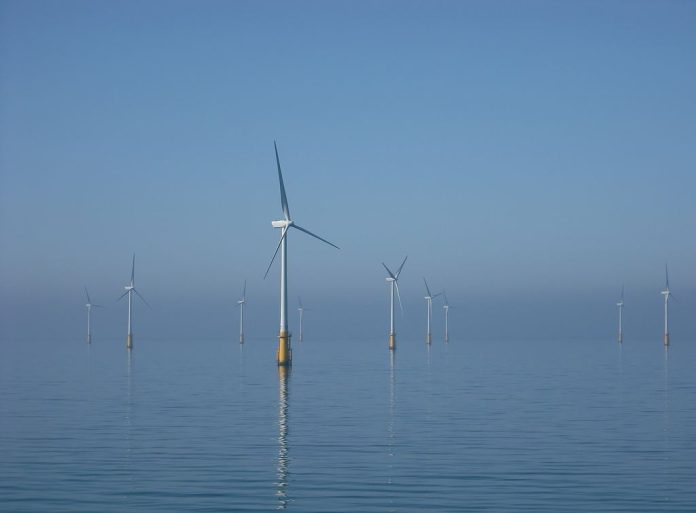
Image: Barrow Offshore wind turbines NR by Original: Andy Dingley; Edit: Muhammad, licensed under CC BY-SA 3.0.