
The Central Government’s approval of an INR 797 crore (~$96 million USD) green hydrogen and ammonia handling jetty at Paradip Port in Odisha marks an important development for India’s National Green Hydrogen Mission. However, for process and mechanical engineers, a deepwater jetty is far more than a civil infrastructure milestone or marine logistics hub. It represents the terminal boundary of a highly complex, integrated chemical and thermodynamic value chain. To understand the engineering realities behind this asset, we must look beyond the headline capital expenditure and analyze the technical requirements connecting gigawatt-scale electrolyzer plants, industrial water treatment trains, and marine loading infrastructure.
1. Upstream Upgrades: Electrolyzer Dynamics and Water Treatment Architecture
A specialized export terminal can only perform as reliably as the upstream production facility feeding it. To sustain a continuous export pipeline at a deepwater port like Paradip, upstream electrolyzer installations must operate at multi-hundred-megawatt or gigawatt scales. From a balance-of-plant (BoP) engineering perspective, this places intense operational demands on power electronics and water purification infrastructure.
Whether a facility deploys Proton Exchange Membrane (PEM) units operating at elevated current densities of 1.5–2.5 A/cm2 or pressurized Alkaline electrolyzer stacks running at 0.4–0.6 A/cm2, the process begins with raw water treatment. While the theoretical stoichiometry of water electrolysis requires 8.9 liters of pure H2O per kilogram of H2 produced, real-world utility intake is significantly higher. Factoring in pre-treatment reject rates from double-pass reverse osmosis (RO), electrodeionization (EDI) polishing waste, and cooling tower evaporation losses, the actual seawater intake requirement ranges from 25 to 30 liters per kilogram of green hydrogen.
For a facility designed to support a nominal export target of 100 metric tons of green H2 equivalent per day, the dedicated seawater desalination plant must process at least 3,000 m3/day of raw feedwater. The treated output reaching the electrolyzer stack must meet ASTM Type I ultra-pure water standards, maintaining an electrical conductivity below 0.1 µS/cm and total organic carbon (TOC) under 50 ppb. Any slip in water quality introduces trace metallic cations (such as Fe2+, Ca2+, or Mg2+) that poison active catalyst sites and cause irreversible degradation of the proton-conducting membranes or nickel-based electrodes.
Furthermore, balancing intermittent renewable generation with steady-state downstream processing requires precise load-following strategies. While PEM stacks can ramp from 5% to 100% capacity in seconds, high-pressure downstream synthesis loops—such as Haber-Bosch units for green ammonia conversion—require stable pressure and temperature profiles. Engineering intermediate buffer storage operating at 30 to 50 bar is essential to prevent thermal cycling fatigue on synthesis catalysts.
2. Vector Physics: Ammonia Handling versus Liquid Hydrogen Cryogenics
While the Paradip terminal is designed to handle green hydrogen and its primary carrier, green ammonia, the thermodynamic properties of the chosen carrier govern the engineering of the loading berth.
“The battle between green ammonia and liquid hydrogen export terminals is won or lost not on bulk energy density, but on the parasitic thermodynamic overhead of the marine loading interface.”
Liquid ammonia (NH3) remains the most viable carrier for long-distance ocean transport. Storing and transferring liquid ammonia at its atmospheric boiling point of -33.3°C requires moderate refrigeration capacity. Metallurgical selection for loading arms, pumps, and transfer lines centers on low-carbon austenitic stainless steels (such as 316L) or fine-grained carbon steels treated to prevent stress corrosion cracking (SCC) caused by trace oxygen contamination in marine environments.
Conversely, direct liquid hydrogen (LH2) handling requires cryogenic conditioning down to -252.8°C (20.3 K). Liquefaction alone demands an energy penalty of 10 to 12 kWh/kg H2—equivalent to nearly 30% of the lower heating value (LHV) of the hydrogen molecule. Boil-off gas (BOG) rates during ship-to-shore transfer are a critical operational challenge:
- Liquid Ammonia: Tank BOG rates typically remain below 0.02% to 0.04% per day. Vapor recovery requires standard multi-stage reciprocating compressors feeding closed-loop condensation units.
- Liquid Hydrogen: BOG rates can reach 0.15% to 0.30% daily due to heat ingress and orthohydrogen-to-parahydrogen spin conversion. BOG recovery requires high-ratio cryogenic compressors or cold-box reliquefaction loops that add substantial parasitic electrical loads to the jetty.
Piping systems for hydrogen service must strictly comply with ASME B31.12 standards. To prevent hydrogen embrittlement under cyclic loading, materials must avoid high-strength steel grades susceptible to atomic hydrogen diffusion into the crystal lattice, utilizing stabilized austenitic stainless steel with minimum nickel equivalents instead.
3. LCOH Impact and Terminal Capital Allocation
To understand the levelized cost of hydrogen (LCOH) delivered at the ship’s manifold, engineers must audit every kWh consumed across the production-to-loading sequence. Assuming an upstream renewable power purchase price of $0.035/kWh, state-of-the-art electrolyzer stack energy consumption (50–55 kWh/kg H2 system-level efficiency) sets the raw H2 baseline cost near 2.50/kg.
Upstream water treatment, demineralization, and cooling water circulating power add roughly 0.45–$0.65/kg in capital amortization and thermal energy inputs. The INR 797 crore terminal expenditure adds an estimated 0.28/kg to the offload LCOH, depending on terminal utilization rates and berth turnaround efficiency over a projected 20-year operational life.
Optimizing this balance-of-plant demands high-efficiency equipment: variable frequency drive (VFD) cryogenic loading pumps operating above 80% hydraulic efficiency, vacuum-insulated pipe (VIP) transfer lines with overall heat transfer coefficients (U-values) below 0.01 W/m2K, and automated dry-break marine couplers to prevent fugitive emissions during connection and disconnection cycles.
4. Operational Imperatives for Engineering Practitioners
As detailed design work progresses on export terminals like Paradip, chemical and mechanical engineers should focus on three practical design considerations:
- Redundant Water Treatment Trains: Raw seawater intake conditions fluctuate seasonally in turbidity, salinity, and bio-burden. Water treatment systems must incorporate redundant ultrafiltration and RO modules with automated clean-in-place (CIP) loops to protect upstream electrolyzers from total operational shut-down.
- Integrated Safety Instrumented Systems (SIS): Due to the low ignition energy and wide flammability limits of hydrogen (4% to 75% in air) combined with the toxicity of ammonia, jetty safety systems require Safety Integrity Level 2 (SIL-2) or SIL-3 architectures. Optical open-path gas detectors, acoustic leak sensors, and fast-acting emergency shutdown valves (ESDV) must be interlocked to isolate marine loading arms within 5 seconds of a detected breach.
- Thermal Dynamic Modeling: Transient thermal stresses during pipe chill-down routines can cause severe flange distortion and gasket leaks. Detailed finite element analysis (FEA) and dynamic thermal modeling must guide line pre-cooling protocols before full-rate fluid transfer begins.
The development of dedicated marine terminals like the one at Paradip Port represents a necessary step in scaling the green hydrogen economy. However, turning capital approvals into viable export hubs requires rigorous engineering—optimizing water treatment recovery, minimizing cryogenic boil-off losses, and integrating every balance-of-plant component for maximum energy efficiency.
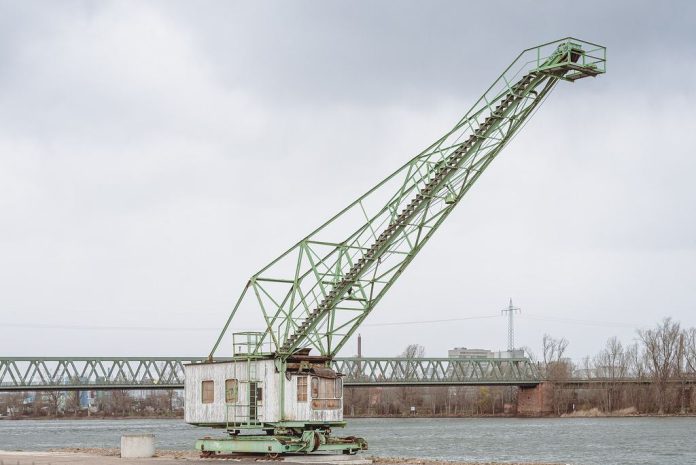
Image: 20230314 Port crane Mainz 01 by Flocci Nivis, licensed under CC BY 4.0.