

Decarbonizing Heavy Rail: Technical Architecture, Electrolyzer Supply Chains, and Economics Behind Hydrogen-Powered Traction Systems
Engineering Insight: The global rail sector stands at a critical technological inflection point. While electric rail powered by overhead catenary lines remains the gold st…
The global rail sector stands at a critical technological inflection point. While electric rail powered by overhead catenary lines remains the gold standard for highdensity intercity corridors, millions of track kilometers across Asia, Europe, and the Americas remain nonelectrified. Capital expenditure requirements for retrofitting rural, mountainous, or lowdensity routes with catenary infrastructure—often exceeding 1.5 million to 3 million per trackkilometer—render total electrification economically unfeasible. As governments push for aggressive netzero timelines, regional transport authorities are pivoting toward hydrogen fuel cell multiple units (HMUs) and heavyhaul hydrail locomotives. The recent industry signals—highlighted by regional developments and coverage in global outlets like The Statesman—underscore a broader systemic transition: hydrogen rail is no longer a localized pilot concept, but a fully viable, heavyduty decarbonization pathway requiring sophisticated power electronics, precise thermal management, and robust localized electrolyzer supply chains.
For engineering leadership and project planners, deploying hydrogen-powered rolling stock requires a holistic reengineering of the rail powertrain. Unlike traditional dieselelectric multiple units (DEMUs), which utilize internal combustion engines driving threephase alternators, hydrail traction systems rely on complex hybrid electrochemical architectures. Converting chemical energy from compressed or cryogenic green hydrogen into multimegawatt traction power introduces multivariable engineering challenges, spanning from Fuel Cell Stack degradation control to high-pressure dispensing dynamics and sitelevel Balance of Plant (BOP) design for green hydrogen production.
Technical Breakdown
At the core of modern hydrail power systems is the Proton Exchange Membrane Fuel Cell (PEMFC) stack array. PEMFC technology is favored in rail applications due to its relatively low operating temperature (60°C to 80°C), rapid startup capabilities, and superior dynamic response compared to Solid Oxide Fuel Cell (SOEC/SOFC) or Phosphoric Acid variants. However, operating a PEMFC stack in a rugged railway environment presents distinct balanceofplant and electrical challenges:
- Hybrid Energy Storage Architecture: A fuel cell is inherently a steadystate power source with poor transient performance during sudden load spikes, such as train acceleration or gradient climbing. To resolve this, hydrail propulsion systems employ a hybrid configuration, pairing the PEMFC stack with a highpower LithiumTitanate (LTO) or NickelManganeseCobalt (NMC) battery system via a highvoltage bidirectional DCDC boost converter. The battery pack acts as a dynamic buffer, providing instant peak current during acceleration and absorbing energy during electrodynamic regenerative braking.
- Thermal Management and Heat Rejection: PEMFCs convert roughly 50% to 55% of the chemical energy in hydrogen into electricity, with the remainder converted into lowgrade waste heat. Because rail profile clearances (the vehicle loading gauge) severely constrain radiator size, managing heat rejection ratios (kW of thermal waste per kW of electrical power generated) is a critical engineering bottleneck. Advanced liquid cooling loops with dynamic variablespeed fans and integrated microchannel heat exchangers are required to prevent thermal degradation of the polymer electrolyte membrane.
- Fuel Storage & Energy Density Constraints: Hydrogen rail applications primarily rely on onboard Type IV carbonfiber fullywrapped composite cylinders operating at nominal working pressures of 350 bar (35 MPa). While 700 bar systems are standard in lightduty passenger cars, 350 bar remains preferred in heavy rail due to lower compression energy penalties, favorable volumetric space availability on roof racks or tender cars, and reduced thermal stress during highflow refueling. For heavy freight haulage requiring continuous output above 3 MW, liquid hydrogen (LH2) at cryogenic temperatures (-253°C) is emerging as the primary alternative to maximize gravimetric energy density.
- Electrolyzer Integration & Fuel Quality (ISO 14687): Supplying hydrail fleets requires highthroughput depotbased refueling infrastructure. Onsite generation using PEM or Pressurized Alkaline Electrolyzers must be paired with MultiStage Ionic Compressors and Pressure Swing Adsorption (PSA) purification units. PEMFC membrane electrode assemblies (MEAs) are extremely sensitive to trace contaminants; presence of hydrogen sulfide (H2S), carbon monoxide (CO), or hydrocarbons exceeding limits set by ISO 14687 Grade D can permanently poison platinum catalyst sites, leading to irreversible stack voltage degradation.
The traction motor drive loop uses advanced Silicon Carbide (SiC) inverter topologies to convert the stabilized DC bus voltage into variablefrequency AC power for Permanent Magnet Synchronous Motors (PMSMs). The high switching frequency of SiC semiconductors decreases inverter losses by up to 30% and reduces physical component footprint—a vital requirement for underfloor or roofmounted rail equipment modules.
Market & Economic Impact
The transition to hydrogen rail is fundamentally anchored in economic viability over the 30to40year lifecycle of railway rolling stock. While the initial capital expenditure (CAPEX) for a hydrogen-powered train set is currently 25% to 40% higher than a comparable diesel unit—driven largely by platinum group metal (PGM) content in fuel cell stacks and carbonfiber composite storage vessels—the total cost of ownership (TCO) equation is rapidly shifting.
“The economics of hydrail hinge directly on the Levelized Cost of Hydrogen (LCOH) at the pump. To achieve parity with low…”
The economics of hydrail hinge directly on the Levelized Cost of Hydrogen (LCOH) at the pump. To achieve parity with lowsulfur diesel fuel without carbon tax subsidies, green hydrogen must be delivered to the locomotive at or below 2.50 to 3.50 per kilogram. Achieving this target requires three main systemic conditions:
- Scale in Electrolyzer Manufacturing: Industrializing stack production (gigafactory scale) for both PEM and high-pressure Alkaline systems is driving down stack CAPEX, lowering the upstream cost component of clean hydrogen generation.
- Colocated Renewable Generation: Rail maintenance depots are increasingly being coupled directly with offgrid solar PV and wind farms via power purchase agreements (PPAs), reducing transmission fees and grid tariff surcharges.
- Reduced Maintenance Overhead: Unlike diesel engines, which contain hundreds of reciprocating mechanical parts subject to high frictional wear, fuel cell stacks and electric traction motors have minimal moving parts. This cuts mechanical maintenance expenditures, oilchange requirements, and overhaul labor costs by an estimated 20% to 30%.
From a policy standpoint, initiatives such as India’s National Green Hydrogen Mission, the European Union’s RED III (Renewable Energy Directive), and the US Inflation Reduction Act (Section 45V Clean Hydrogen Production Tax Credit) are serving as crucial catalyst mechanisms. By penalizing diesel emissions through carbon pricing and subsidizing earlystage green hydrogen production, these regulatory frameworks accelerate the breakeven milestone for rail operators.
Future Outlook
As the hydrail sector moves beyond regional passenger demonstration loops, next-generation research and development is focused on scaling power densities and extending component operational lifespans. Current PEM fuel cell stacks targeting rail applications aim to surpass a operational lifespan of 30,000 operational hours—the benchmark required to match midlife rail overhaul cycles—up from the current average of 15,000 to 20,000 hours.
Key technological vectors shaping the next decade of hydrogen rail include:
- Solid Oxide & HighTemperature PEM Cells: Transitioning to HighTemperature PEM (HTPEM) operating at 120°C180°C will drastically simplify thermal management requirements, as the higher temperature differential relative to ambient air allows for significantly smaller radiator modules. Furthermore, HTPEMs exhibit substantially higher tolerance to CO impurities in the hydrogen feed gas.
- HighFlow CryoCompressed Hydrogen (CcH2): Positioned between 700bar compressed gas and liquid H2, cryocompressed storage offers unmatched volumetric storage density without the severe boiloff evaporative losses associated with unpressurized liquid hydrogen storage, making it ideal for transcontinental heavy freight corridors.
- Standardization of HighFlow Refueling Interfaces: Standardizing refueling protocols (expanding SAE J2601 standards to heavy transport) to support flow rates exceeding 100 grams per second will enable hydrail refuel times to rival current diesel fueling durations—refilling an entire multipleunit train set within 15 to 20 minutes.
The clean energy shift signaled by recent hydrogen rail developments represents far more than a simple engine swap. It is a comprehensive systemlevel transformation that sits at the intersection of electrochemistry, advanced power electronics, smart grid optimization, and strategic energy policy. As green hydrogen supply chains mature and electrolyzer economics scale globally, hydrogen traction systems will cement their role as the premier technology vector for decarbonizing nonelectrified heavy transit worldwide.
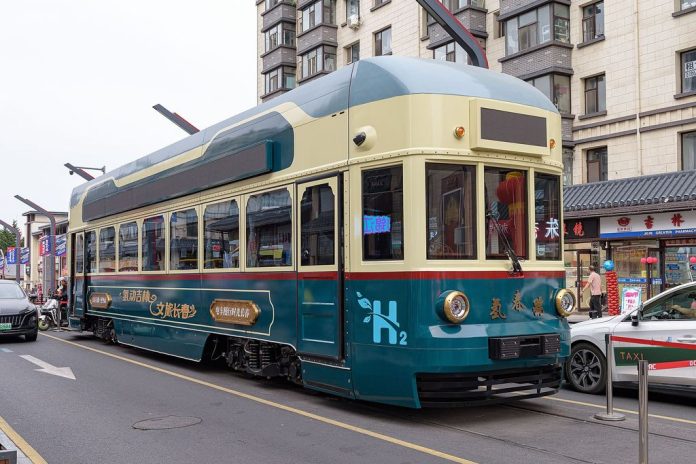
Image: CRRC Changchun hydrogen tram at Hongqi St, Heguang Rd (20250923160259) by N509FZ, licensed under CC BY-SA 4.0.