
Engineering India’s First Hydrail: PEMFC Retrofitting, Hybrid Powertrain Architecture, and Green Hydrogen Fueling on the Jind–Sonipat Corridor
Engineering Insight: Indian Railways, operating one of the largest rail transportation networks in the world, is undertaking a transformative transition toward absolute ca…
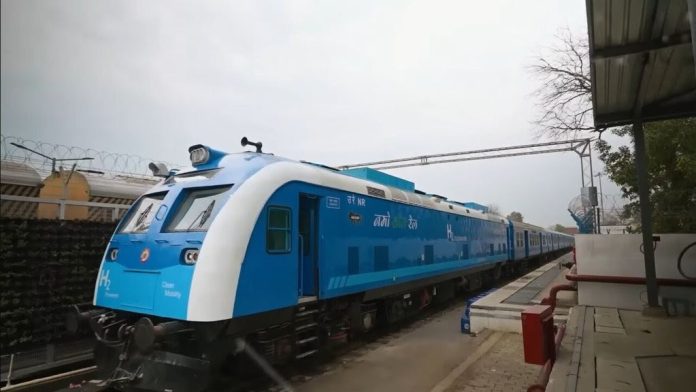
Indian Railways, operating one of the largest rail transportation networks in the world, is undertaking a transformative transition toward absolute carbon neutrality by 2030. While overhead 25 kV AC catenary electrification covers the vast majority of highdensity trunk routes, nonelectrified branch lines, regional spurs, and ecologically sensitive heritage routes present distinct economic and structural barriers to traditional electrification. Installing overhead equipment (OHE) on lowdensity lines often incurs unjustifiable capital expenditure (CAPEX) per track kilometer. To eliminate diesel traction across these secondary routes without compounding grid burden, Indian Railways launched its flagship “Hydrogen for Heritage” initiative. The pilot milestone of this program is the deployment of India’s first hydrogen-powered fuel cell train on the 89kilometer Jind–Sonipat corridor in Northern Railway’s Delhi Division.
Engineered via a retrofit of existing Diesel Electric Multiple Units (DEMUs), this project represents a complex systems engineering task: replacing heavy internal combustion diesel prime movers with advanced Proton Exchange Membrane Fuel Cell (PEMFC) stacks, highpower energy storage systems (ESS), specialized power electronics, and high-pressure onboard gas storage. Developed in partnership with Medha Servo Drives and international technology partners, the Jind–Sonipat hydrail platform serves as a realworld testing ground for heavyduty transportation decarbonization under extreme tropical climatic conditions. This technical deepdive examines the engineering architecture, hybrid powertrain integration, balanceofplant dynamics, refueling infrastructure, and longterm economic viability of India’s pioneering hydrail initiative.
Technical Breakdown
Transitioning a standard DEMU trainset to hydrogen propulsion demands a complete overhaul of the energy conversion and mechanical payload distribution systems. The legacy engine compartment—traditionally housing a highdisplacement diesel generator set—is completely cleared to accommodate a zeroemission hybrid power plant configured in a fuelcelldominant or fuelcellbattery hybrid layout.
1. Fuel Cell Stack Integration & PEMFC Dynamics
The core power generation system utilizes low-temperature Proton Exchange Membrane Fuel Cells (PEMFC). PEMFC technology is chosen over Solid Oxide (SOFC) or Alkaline (AFC) architectures due to its high power density, rapid coldstart capabilities (reaching full load in seconds), and dynamic response to variable traction commands. The fuel cell stack operates by electrochemically combining onboard gaseous hydrogen (H2) at the anode and atmospheric oxygen (O2) at the cathode across a polymer electrolyte membrane, generating direct current (DC) electricity, water vapor, and waste heat:
Anode Reaction: 2H2 \rightarrow 4H+ + 4e^-
Cathode Reaction: O2 + 4H+ + 4e^- \rightarrow 2H2O
Overall Cell Reaction: 2H2 + O2 \rightarrow 2H2O + Electrical Energy + Thermal Energy
To provide sufficient tractive force for a multicoach passenger trainset, multiple highefficiency fuel cell modules (rated cumulatively between 800 kW to 1.2 MW continuous output) are connected in seriesparallel configurations. Operating efficiency ranges between 50% and 60% lower heating value (LHV), significantly outperforming the 3035% thermal efficiency of modern locomotive diesel engines.
2. Battery Hybridization & Energy Management Strategy (EMS)
Fuel cells inherently exhibit a relatively soft electrical characteristic and limited dynamic transient response speed. Rapid acceleration demands from the train operator can cause fuel cell starvation if forced to track sudden load spikes directly, leading to membrane degradation and voltage sag. To mitigate this, the Jind–Sonipat hydrail platform incorporates a LithiumIon / Lithium Titanate Oxide (LTO) battery pack operating as a highpower energy buffer.
LTO chemistry is selected for its high operational safety, exceptional operational Crates (exceeding 10C for charging/discharging), and superior cycle life (over 15,000 deep discharge cycles), which is crucial for handling the constant stopandgo profiles of regional rail transport. The electrical power architecture links the PEMFC and the LTO battery onto a highvoltage DC bus via bidirectional DCDC converters:
- Base Load Mode: During constantspeed cruising, the PEMFC operates at its optimal efficiency point, supplying continuous power to the DC link to feed the variablefrequency drive (VFD) traction inverters while tricklecharging the LTO battery.
- Peak Acceleration Mode: When starting from a station or climbing gradients, the Energy Management Strategy (EMS) commands the bidirectional DCDC converter to draw immediate highampere power from the LTO battery, supplementing the PEMFC output to meet maximum torque requirements.
- Regenerative Braking Mode: During deceleration, the traction induction motors switch to generator mode. The bidirectional converter steps up the generated voltage and routes kinetic electrical energy back into the LTO battery pack, drastically improving overall system roundtrip efficiency and eliminating friction brake wear.
3. Onboard Storage & Safety Systems
Gaseous hydrogen is stored in roofmounted TypeIV composite cylinders (consisting of a seamless highdensity polyethylene liner wrapped in a fully impregnated carbon fiber shell). Operating at a nominal working pressure of 350 bar (35 MPa), TypeIV tanks deliver an optimal strengthtoweight ratio while resisting hydrogen embrittlement. The roof placement ensures that in the unlikely event of a leak, hydrogen—being nearly 14 times lighter than air—rapidly disperses vertically into the atmosphere without pooling beneath passenger compartments.
Safety systems feature layered redundancy: ultrafast electrochemical hydrogen detection sensors integrated throughout the roof cavity, optical flame detectors, emergency shutoff valves (esolenoids), and temperatureactivated Thermal Pressure Relief Devices (TPRDs) that safely vent the gas if internal pressure or temperature thresholds are exceeded during operation.
“4. Thermal Management & Balance of Plant (BoP)
Thermal management presents a major engineering challenge in Indian clima…”
4. Thermal Management & Balance of Plant (BoP)
Thermal management presents a major engineering challenge in Indian climatic conditions, where ambient temperatures frequently exceed 45°C. PEMFCs operate at optimal internal temperatures of 60°C to 80°C. Because the temperature differential (ΔT) between the stack operating point and ambient air is narrow compared to internal combustion engines (which operate at several hundred degrees), heat dissipation requires massive cooling loops. The Balance of Plant (BoP) includes variablespeed coolant pumps circulating deionized water, ultralow conductivity coolant mixtures, heavyduty cooling radiators with highaspectratio fans, and highefficiency motorized air compressors equipped with air humidifiers to ensure the PEM membranes remain hydrated without drowning the reaction channels.
5. Refueling Infrastructure & Electrolyzer Integration
To support the Jind–Sonipat service, dedicated green hydrogen production and refueling infrastructure has been deployed at the Jind depot. The facility integrates a 2 MW Proton Exchange Membrane (PEM) electrolyzer powered by dedicated renewable energy purchase agreements (PPAs). The unit electrolyzes highpurity ultradeionized water to yield highpurity hydrogen gas (99.999% purity, meeting ISO 14687 Grade D specs required for PEMFC longevity).
The lowpressure hydrogen output (approx. 30 bar) from the electrolyzer passes through multistage ionic or diaphragm compressors to reach storage pressures up to 450500 bar in groundbased cascade storage tubes. Fastfill dispensers utilize automated precooling loops (chilling the gas to -20°C to -40°C during transfer) to perform complete train refueling within 15 to 20 minutes, permitting rapid operational turnarounds identical to legacy diesel refueling schedules.
Market & Economic Impact
The introduction of hydrail on the Jind–Sonipat line has profound market implications across the transport sector, energy infrastructure, and industrial supply chains in South Asia.
1. CAPEX vs. OPEX Tradeoffs
While overhead 25 kV AC electrification costs approximately INR 1.5 to 2 Crore (180,000 to 240,000 USD) per kilometer, deploying it over rural, mountain, or lowfrequency branch lines yields low return on capital investment. Hydrail bypasses the heavy upfront civil infrastructure investment of substations, transmission lines, and catenary gantries. However, the initial capital expenditures for hydrogen trainsets and localized electrolyzerdispensing hubs remain high. Over time, as stack production scales globally and system components standardize, capital costs for hydrogen multiple units are projected to drop by 4050%.
2. Fuel Parity and the National Green Hydrogen Mission
The operational expenditure (OPEX) of hydrail is directly bound to the Levelized Cost of Hydrogen (LCOH). Currently, green hydrogen production costs in India range from 4.00 to 5.50 per kilogram. To achieve cost parity with traditional diesel traction (accounting for energy density conversion efficiencies), the green hydrogen production target must approach 1.50 to 2.00 per kilogram. India’s National Green Hydrogen Mission (NGHM), backed by an initial outlay of INR 19,744 Crore (2.4 billion USD), explicitly aims to push domestic production costs down to this lower threshold by 2030 through electrolyzer manufacturing incentives (SIGHT program), renewable power bundling, and transmission fee waivers.
| Metric | Legacy DEMU Traction | PEMFCBattery Hydrail | 25 kV Overhead Electrification |
|---|---|---|---|
| Infra CAPEX | Low (Existing track) | Moderate (Depot HRS only) | High (₹1.5 2 Cr/km) |
| Power Output Efficiency | 30% 35% | 50% 60% | 85% 90% (Gridtowheel) |
| Emissions (Tailpipe) | High (CO2, NO_x, PM2.5) | Zero (H2O only) | Zero (Direct) |
| Refueling/Charge Time | 10 15 minutes | 15 20 minutes | Continuous (OHE contact) |
3. Supply Chain Localization & Industrial Upskilling
By mandating local integration via Medha Servo Drives and Indian Oil Corporation Limited (IOCL), Indian Railways is fostering an indigenous supply chain ecosystem for heavyduty hydrogen components. Developing domestic engineering capability in high-pressure gas handling, tractiongrade fuel cell packaging, specialized power converters, and highvoltage energy management creates highvalue engineering capacity within India’s industrial sector. This positions domestic firms to compete in the expanding international market for zeroemission commercial vehicles and rail equipment.
Future Outlook
The successful deployment and continuous operational telemetry from the Jind–Sonipat corridor will set the baseline standard for expanding hydrail across India’s railway network. Indian Railways has identified 35 narrowgauge and broadgauge heritage routes for hydrogen deployment, including iconic lines like the Darjeeling Himalayan Railway, Nilgiri Mountain Railway, KalkaShimla Railway, and Matheran Hill Railway. These ecologically sensitive ecosystems benefit immediately from the complete elimination of local diesel exhaust, toxic particulates (PM_{2.5} and PM_{10}$), and elevated acoustic footprints.
Looking beyond retrofitted passenger DEMUs, the next logical milestone is the development of groundup, purposebuilt Fuel Cell Multiple Units (FCMUs) and multiMW heavyhaul hydrogen freight locomotives. For freight corridors handling high trailing loads, higher volumetric storage solutions—such as onboard liquid hydrogen (LH2) storage tanks operating at cryogenic temperatures (-253°C)—are being evaluated globally to maximize range and power density.
Furthermore, as smart energy grids evolve, hydrail refueling stations can perform localized gridbalancing services. Highcapacity electrolyzers at rail depots can participate in demandresponse schemes, generating hydrogen during periods of peak solar and wind curtailment, effectively stabilizing the regional power grid while generating cheap green fuel for heavy transport.
The Jind–Sonipat hydrail pilot represents far more than an incremental technology test; it is a critical proofofconcept for localized, heavyduty zeroemission transportation in developing economies. Through systemic engineering refinement, strategic localized manufacturing, and sustained policy support under the National Green Hydrogen Mission, India is shaping a sustainable blueprint for global rail decarbonization.