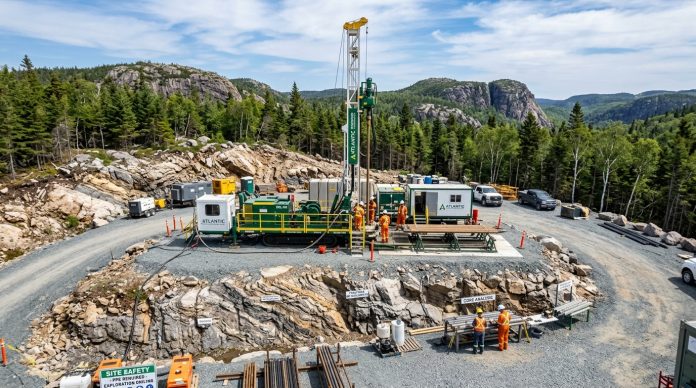

Primary Hydrogen Corp. has secured two licences covering 1,166 hectares in Nova Scotia’s Cumberland Basin to explore natural hydrogen resources, according to Hydrogen Fuel News. While reserve estimates, target depths, and prospective flow rates have not been disclosed, the staking of exploration acreage highlights the expanding technical focus on naturally occurring hydrogen deposits as an alternative to water electrolysis pathways.
Shifts in Power Conditioning and Balance of Plant
For plant engineers and project developers, natural hydrogen extraction presents an entirely different balance-of-plant profile compared to standard green hydrogen installations. Water electrolysis facilities require substantial electrical infrastructure, including high-voltage grid connections, step-down transformers, and heavy-duty rectifiers to supply direct current to the cell stacks. These power conversion systems represent a major portion of project capital expenditure and introduce conversion efficiency losses.
A natural hydrogen production site eliminates the primary electrochemical conversion step altogether. Electrical load requirements are confined largely to parasitic mechanical duties, such as wellhead gathering, downhole monitoring, control instrumentation, and multi-stage product compression. Consequently, the total power demand per kilogram of hydrogen produced drops significantly, allowing facilities to be planned in areas where grid capacity or local renewable power availability would otherwise constrain megawatt-scale electrolyser deployment.
Gas Purification versus Feedstock Water Pretreatment
Deploying geologic hydrogen facilities alters the core chemical engineering challenges on site, trading water treatment complexity for gas-phase separation:
- Elimination of demineralized water infrastructure: Electrolysers require continuous, reliable supplies of ultra-pure water to protect catalysts, membranes, and porous transport layers. Geologic extraction bypasses raw water sourcing, reverse osmosis, and electrodeionization systems, drastically reducing site water consumption and associated wastewater disposal permitting.
- Integration of surface gas separation trains: Raw gas streams from natural formations are rarely pure hydrogen. Depending on the local geology, raw production may contain varying fractions of nitrogen, carbon dioxide, methane, or noble gases. Plant engineers must implement robust surface separation technologies—such as multi-bed Pressure Swing Adsorption (PSA), selective polymeric membranes, or cryogenic separation—to elevate hydrogen purity to fuel-cell or industrial pipeline specifications.
Downstream Sizing Under Subsurface Uncertainty
A central challenge for developers transitioning from electrolysis to natural hydrogen is facility sizing. In an electrolyser facility, capacity is deterministic and modular, directly coupled to renewable power generation profiles and stack counts. In contrast, natural hydrogen projects carry reservoir uncertainty common to subsurface resource extraction.
Until exploratory drilling and extended flow tests provide empirical data on reservoir deliverability, bottom-hole pressure, and gas composition, downstream equipment cannot be definitively sized. Plant developers must therefore prioritize modular, skid-mounted gas conditioning and compression units. This modular approach allows project engineers to scale surface offtake infrastructure incrementally as field extraction rates mature, mitigating the capital risk of constructing oversized gathering networks and compression trains before reservoir performance is proven.
Source
This analysis was written from reporting by Hydrogen Fuel News: Natural Hydrogen Production Gains Momentum: Primary Hydrogen Stakes Northumberland Project in Nova Scotia, published 18 August 2026. Figures and events above are as reported there; the engineering commentary is ours.