
According to Down To Earth, India is aggressively pursuing its National Green Hydrogen Mission (NGHM) with a target of at least 5 million tonnes of annual green hydrogen production by 2030. However, for project developers and plant engineers, scaling up generation capacity involves navigating tight economic margins, strict export compliance frameworks, and complex transport logistics. By December 2025, the government awarded incentives for 0.862 million tonnes per annum of production capacity and 3,000 MW per annum of electrolyser manufacturing, representing roughly 17 percent of the 2030 target. For technical teams, translating these ambitious milestones into viable industrial plants requires a careful look at power sourcing, water balances, and supply chain constraints.
Power Integration and Electrolyser Economics
From an operational standpoint, the single largest cost driver in green hydrogen production is renewable energy (RE), accounting for 50 to 70 percent of total production costs. This is particularly true when round-the-clock (RTC) supply is required to maintain high plant capacity factors for capital-intensive electrolysers. While the government has waived Inter-State Transmission System (ISTS) charges to help lower power costs, plant designers must still optimize power conditioning and grid integration. Furthermore, heavy reliance on global supply chains for RE equipment and electrolysers exposes projects to concentrated manufacturing bottlenecks and critical mineral dependencies.
Current policy incentives under the Strategic Interventions for Green Hydrogen Transition (SIGHT) programme provide short-term production subsidies for green hydrogen (declining from Rs 50 to Rs 30 per kg) and green ammonia (declining from Rs 8.8 to Rs 5.3 per kg) over a three-year period. From a project finance perspective, these subsidies cover only 10 to 15 percent of the green-grey cost gap. Electrolyser manufacturing incentives are similarly structured over five years, declining from Rs 4,440 to Rs 1,480 per kW. Because these measures are temporary, long-term asset viability will ultimately rely on achieving economies of scale, procuring cheaper domestic RE, and leveraging domestic electrolyser manufacturing supported by performance-linked incentives.
Logistical Constraints and Derivative Conversion
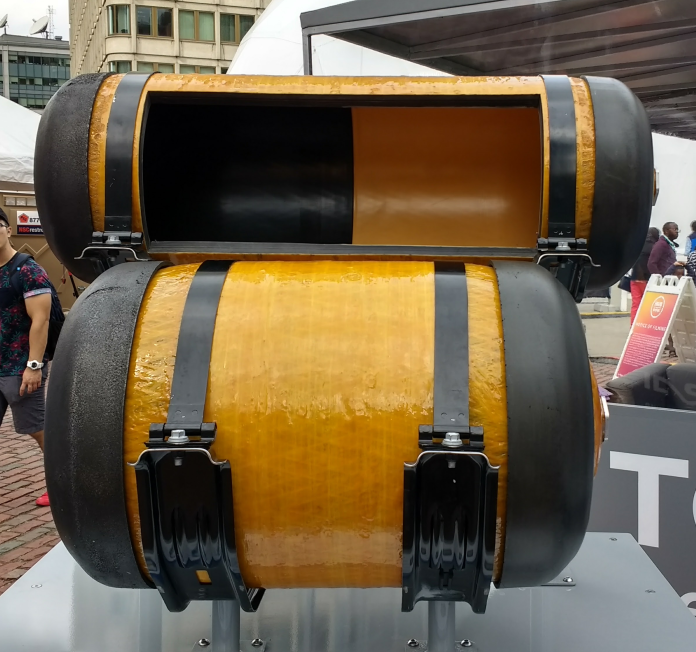
Plant siting and logistics present severe engineering hurdles due to the physical properties of hydrogen. Transporting pure hydrogen over long distances is economically punishing because of the high parasitic energy loads required for compression (200 to 700 bar) or cryogenic liquefaction at minus 253 degrees Celsius. Furthermore, a geographic mismatch often exists between renewable-rich generation clusters and designated export hub ports, such as the considerable distance between generation centers and Paradip port, contrasted with the closer proximity seen at Kandla.
To bypass the prohibitive costs of pure hydrogen transport, project developers are increasingly looking toward derivative conversion at the source. Converting green hydrogen into green ammonia or green methanol—as seen in recent long-term supply agreements signed by ACME Group for Japanese markets—allows facilities to utilize existing chemical transport infrastructure. For domestic integration, decentralised use by nearby refineries and fertiliser plants via blended natural gas pipelines offers a more efficient pathway, reserving pure, long-distance hydrogen transport only where strictly necessary. Additionally, plant designers must account for local resource constraints; water-stressed locations will mandate robust sourcing and treatment strategies, including industrial-scale desalination, to secure the high-purity feedwater required for electrolysis.
Put this to work
Run the numbers: use the free Water Consumption & Treatment Calculator to estimate the water and treatment duty for a plant of this kind.
Planning a green hydrogen project? Avoltium advises developers and EPCs on electrolyser selection, balance of plant, water treatment and pumps. See consulting services or get in touch.
Get the engineering briefing: new analyses by email, no spam.
Source
This analysis was written from reporting by Down To Earth: Green hydrogen: India’s big ambitions, costly realities, published 06 November 2026. Figures and events above are as reported there; the engineering commentary is ours.